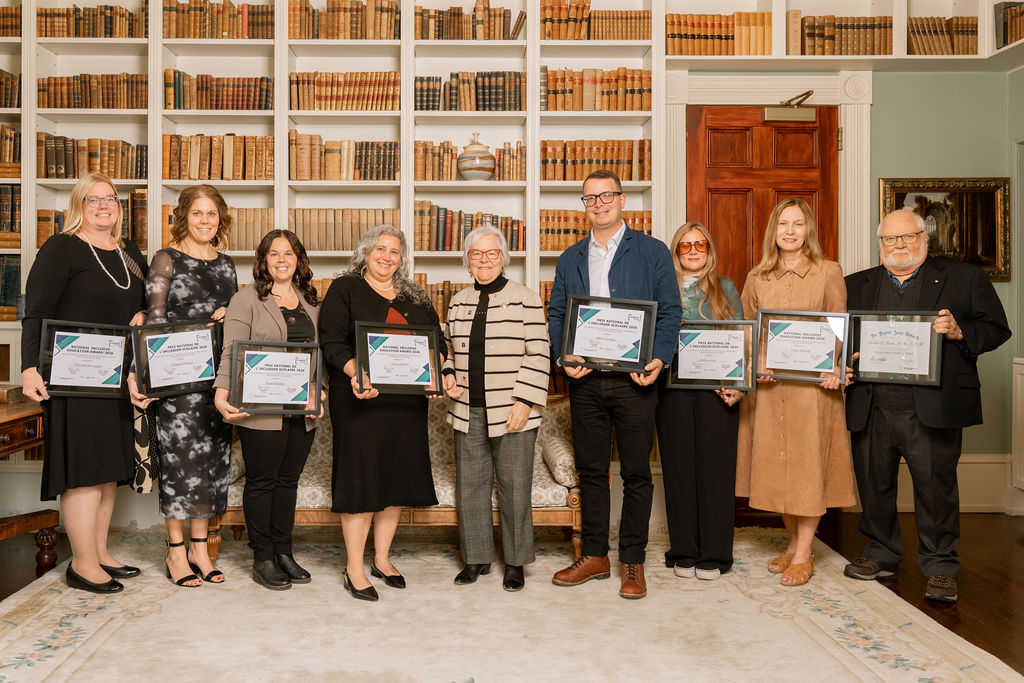
In a ceremony on October 13 at Government House, New Brunswick educators were recognized with National Inclusive Education Awards for their exemplary leadership and unwavering dedication to inclusive education. The awards are presented annually in partnership with Inclusion Canada, with the recipients being nominated by their student’s families as well as their peers.
The awards highlight the integral role schools, and their leadership, have in ensuring our children feel welcome and valued. These educators champion and create spaces where every student feels safe, supported and can contribute.
The awards were presented by Lieutenant Governor Louise Imbeault, the Patron of Inclusion NB, at her official residence.
New Brunswick’s recipients of the 2026 National Inclusive Education Awards are:
Naomie Pelletier, Director, Garderie La Forêt des Découvertes, Balmoral
The foundation for an inclusive community begins in early childhood. When young children learn and play together from the start, they develop friendships, empathy, and an understanding that everyone belongs. At Garderie La Forêt des Découvertes in Balmoral, inclusion is built into the environment itself, ensuring every child can participate, explore, and learn together.
As a nature-based early learning centre, Naomie recognized that spending most of the day outdoors could unintentionally create barriers for some children. Rather than limiting participation or creating separate experiences, she redesigned their outdoor environment so it would be accessible to everyone.
A paved trail winds through the forest, allowing children with mobility challenges to explore nature. The trail also provides access to the daycare’s outdoor classroom which is a shared experience for all.
The impact has been significant. Children who required assistance to move through outdoor spaces are now choosing activities independently, participating more confidently, and building relationships through shared play. The environment itself removes barriers, allowing children to focus on learning, exploring, and simply being children.
Inclusion extends well beyond the physical space. When a child requires additional support, Naomie ensures that they collaborate with families to develop individualized plans that may include visual supports, sensory tools, adapted routines, or quiet spaces.
To continually strengthen inclusive practice, Naomie leads regular team meetings to provide opportunities to review children’s evolving needs, share successful strategies, and ensure consistent, responsive support. As a result, inclusive planning begins before activities are offered, creating learning experiences that are designed for all children from the outset.
Naomie is always observing and present. She is not often in her office. It’s by being hands on that she notices the needs that can’t always be communicated. She believes in being proactive so that the team is ready. Naomie seeks support right away when needed. She doesn’t let challenges – or even a ‘no’ stop her. If she hits a wall, she goes elsewhere to find the solution.
Tanya McBride, Resource Teacher, Leo Hayes High School, Fredericton
Inclusive education becomes meaningful when students experience more than access to a classroom. They experience belonging, participation and the confidence to be themselves. At Leo Hayes High School in Fredericton, Tanya McBride demonstrates this commitment through daily actions that remove barriers and ensure students are valued members of their school community.
Tanya understands that a successful transition to high school begins before the first day of classes. Recognizing that crowded hallways, unfamiliar routines, and new environments can create significant barriers for some students, Tanya ensures that students are met before they begin Grade 9. She facilitates personalized tours, identifies safe spaces, explains daily routines and develops transition plans tailored to individual needs.
For one student with Autism who experienced significant anxiety around crowded hallways and unpredictable routines, Tanya created a gradual transition plan that included early hallway access, quieter routes between classes and a visual schedule. She worked with teachers to identify sensory triggers and practical classroom strategies. As a result, the student was able to complete the semester.
Tanya works to build student independence. For a student with a learning disability and significant academic anxiety, Tanya provided instruction in assistive technology, helped break assignments into manageable steps and collaborated with teachers to maintain high expectations while providing meaningful supports. By the end of the semester, the student was attending regularly, completing assignments, and advocating directly for their own needs. Overall, crisis response events have decreased under Tanya’s leadership.
Tanya has endeavoured to ensure that, whether students are in class or, on occasion, working on specific goals outside of the classroom, the work is meaningful. There are workspaces throughout Leo Hayes that facilitate meaningful “Skills for Independence” learning. Each station aligns with the individualized goals on a student’s Personal Learning Plan, and multiple students can utilize a station during the day as a supplement to their in-class learning. Much thought is put into the student materials and the goals to achieve at each station, and report cards track and celebrate this progress. Other schools have heard about the success of these stations and are now creating similar models. Tanya feels strongly that this demonstrates Leo Hayes’ commitment to thoughtful, intentional inclusion practices.
Mario Levesque, Project Manager – Educational Technology, Place aux compétences, Shediac
Over the past few years, Mario Levesque from the organization Place aux compétences has demonstrated remarkable leadership in school inclusion by adapting and implementing the Makers Making Change initiative within Francophone communities in the province. While this movement primarily existed in English-speaking contexts, he took the initiative to adapt, translate, and make it culturally relevant for Francophone schools and community settings, in collaboration with the Neil Squire Society and District scolaire francophone Sud.
Specifically, Mario has organized inclusive fabrication workshops and projects where students design and assemble objects, toys, and assistive technologies that meet the real needs of people with disabilities. These creations are intended for practical use in the community and extend beyond the classroom.
To ensure the relevance, safety, and effectiveness of the solutions developed, Mario established a close partnership with the Vitalité Health Network to guide students in designing safe, functional, and adapted solutions.
To date, more than 2,000 students across New Brunswick have had the opportunity to participate in these projects, and over 1,000 toys and adaptive technologies have been designed, assembled, and delivered to members of the wider community.
Mario works closely with students at every stage of the process: design, assembly, testing, adjustments, and delivery. This approach allows students to see firsthand that their actions can improve the quality of life of others, strengthening their sense of confidence, and civic engagement.
Mario is resilient and never gives up. He is always there for the students and teachers and is never afraid of input or new ideas. He is quick to adapt activities to ensure every student will be included and never loses sight of the student’s right to express their choices and to have a say.
At the provincial level, Mario’s leadership has made a social and school inclusion movement fully accessible in French, reducing linguistic and cultural barriers. His work contributes to the sustainable inclusion of all students by positioning schools as key agents of social change, capable of addressing real needs while shaping engaged, empathetic, and responsible citizens.
These students gain confidence, develop empathy, and position themselves as true leaders within their schools and communities. They understand that they have a role to play, that they can be agents of change.
Olwyn Klinker, Educational Assistant, Gibson Neil Memorial School, Fredericton
Inclusive education is about creating classrooms where every student belongs, participates, and can thrive. Educational Assistant Olwyn embodies this commitment every day through her support of Brynn, a student with complex communication needs.
When Brynn became one of the first students in New Brunswick to use a new eye-gaze augmentative and alternative communication (AAC) system, Olwyn embraced the challenge with determination. She quickly mastered the technology, learning to program, troubleshoot, and integrate the device into Brynn’s daily classroom experience. Rather than viewing the technology as a specialized tool used only during one-on-one support, Olwyn ensured it became a natural part of classroom learning, peer interactions, and everyday communication.
Just as importantly, Olwyn became a collaborative leader. She worked closely with Brynn’s family, teachers, speech-language pathologists, district staff, and the Stan Cassidy AAC team, sharing practical knowledge that has strengthened inclusive practice far beyond a single classroom. Her leadership is helping build capacity for other students who will benefit from similar communication supports in the future.
The results have been remarkable. Brynn has become more independent, better able to express her wants, needs, and choices, and more actively engaged with classmates and learning. The consistent use of this communication system at school has also strengthened her ability to communicate at home, creating meaningful connections across all aspects of her life.
Olwyn’s dedication demonstrates that inclusion is more than access. It is ensuring every student has a voice and every voice is heard. Through her expertise, innovation, advocacy, and unwavering belief in Brynn’s potential, she has strengthened not only one student’s educational journey but also the capacity of her entire school community to create a truly inclusive learning environment.
Christina Delaney, Principal of École Le Marais, Dieppe
Inclusive education is built through everyday decisions that ensure every student is recognized as a valued member of the school community. As Principal of École Le Marais in Dieppe, Christina Delaney has made those decisions the foundation of her leadership.
When the school organizes outings such as skating, every student goes. This year, one student with autism experienced skating for the first time. Recognizing the importance of easing transitions, Christina also arranged for the student to return to the rink every two weeks with students from the neighbouring school they will attend next year, building familiarity, confidence, and relationships before the move to middle school.
Christina has also ensured that the school’s physical environment reflects its commitment to belonging. During the second phase of the playground redevelopment, she championed the installation of an accessible swing so students with mobility disabilities could enjoy recess alongside their peers. Inside the school, four calming spaces provide students with sensory and emotional regulation needs a place to regroup and return to learning successfully.
Teachers are encouraged and supported to adapt instruction so students can participate meaningfully, even when accommodations or shorter periods of engagement are needed. Students are welcomed into classroom activities, school clubs, and everyday learning experiences based on their strengths and interests.
Christina’s leadership also reaches beyond the school through initiatives such as flexible learning workshops, which bring artists, community members, parents, and local organizations into the school to share their knowledge and talents. By strengthening connections between school and community, she creates richer opportunities for every student to learn, contribute, and belong. She believes all activities are for everyone, and if not, they have no place in the school.
She is a calm force. When a student is in crisis, she gives them the time and space to return to calm and then return to class. Christina views a crisis as their communication the school is experiencing fewer instances. All students feel safe, heard and valued.
Audrey Long, Community Development Coordinator, École Les Éclaireurs, Fredericton
Audrey Long stands out for her ability to turn the principles of inclusion into concrete actions within schools. In her role as a community development officer with the District scolaire francophone Sud, she organizes a wide variety of educational and social activities, ensuring that every student can fully participate. She plans her initiatives with potential barriers to participation in mind, whether they are financial, social, cultural, or related to specific needs. For example, she adapts activities to make them accessible for neurodivergent students, provides safe environments for youth with anxiety, and offers flexible formats that allow everyone to engage at their own pace. Her commitment to neurodiversity is also reflected in authoring a book on Autism, demonstrating her desire to equip educational communities with resources and raise awareness among youth about the importance of acceptance.
Audrey also places great importance on a sense of belonging. She creates opportunities for students to feel seen, heard, and valued, helping to build school environments that are caring and respectful of differences.
For school staff, Audrey acts as a unifying resource. Her ability to bring people together around common projects facilitates the implementation of more inclusive practices and strengthens the culture of collaboration within schools. She creates partnerships and reaches out to external organizations.
For students, her initiatives foster a greater sense of safety and belonging, which encourages their participation in school life and strengthens their engagement.
The school climate is enriched as a result, with more respectful interactions, students showing greater openness to differences, and a spirit of solidarity developing naturally. She even ensures that all staff members feel included and thanked. Her work helps build learning environments where every student truly has a place and the opportunity to thrive.
From her nominator: Audrey lives inclusion not just for herself and her sons; she lives it for everyone and raises awareness on a large scale.
Christina Barrington, Principal, Saint John High School
As Principal of Saint John High School, Christina Barrington is creating a culture where students with diverse abilities and backgrounds are included.
One of the most tangible examples of this commitment is the Elevate program, which Christina championed over an 18-month period. Recognizing that a significant number of newcomer students were experiencing chronic absenteeism driven not by disengagement but by unaddressed trauma and cultural displacement, she worked with the school’s guidance team to design a course grounded in resiliency research from Dalhousie University.
Rather than treating absence as a disciplinary issue, she reframed it as a signal that the school needed to adapt. The result was a structured, curriculum-based course designed to build resilience, reduce triggers, and help newcomer students feel genuinely connected to their school and broader Saint John community. Christina also ensured the program was staffed with a guidance teacher who had her own lived experience, creating an environment of deep cultural authenticity and peer understanding.
To fund this program and other welcoming initiatives, she supported her staff in proactively seeking resources beyond the school’s budget. She supported the successful application for $900,000 from the federally-funded Building Safer Communities Fund.
This was used to build a new sensory-friendly space within the school, a concrete structural investment in the idea that not all students experience the school environment the same way and that the physical space itself must be inclusive.
Christina co-chaired Pride in Education from 2019 to 2025, demonstrating visible, sustained leadership on 2SLGBTQIA+ inclusion. Her involvement is not symbolic, it reflects an understanding that affirming school environments require policy, culture, and administrative leadership working together.
She has also instituted Collaborative Team Meetings (CTM’s) specifically focused on reviewing Tier 1 interventions. This process was designed to ensure that all students who require support receive it, not only those who have a formal Personalized Learning Plan.
This has built capacity with teachers and has reduced referrals for Tier 2 and 3 supports. Teachers see the value of having a problem-solving model that is embedded in their schedule. And most importantly, students are seen through a lens of strength and inclusion.
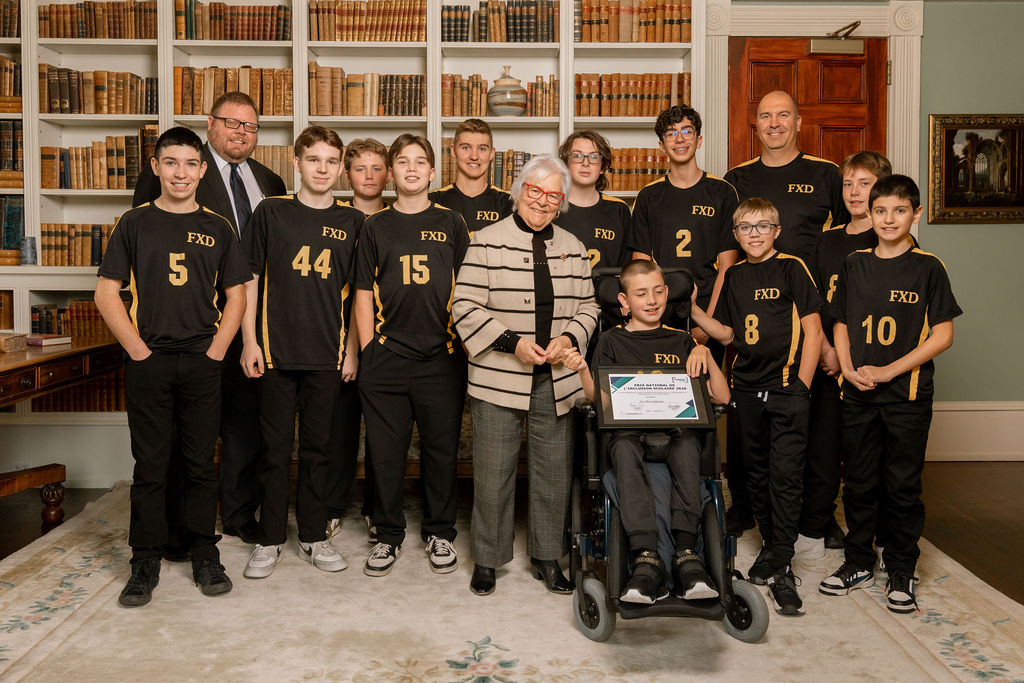
Boys’ Volleyball Team, École François-Xavier-Daigle, Allardville
Two years ago, the coach of the boys’ volleyball team approached the school administration to ask if Liam Friolet could join the team. During matches, Liam hands the ball to the player for the first serve of each game. One of his teammates pushes him to the service line, and after the first serve, he returns to the bench. From the bench, he watches and encourages his team with dedication.
When the team won the provincial championship last Spring, the players immediately went to Liam to celebrate their victory together. A sports enthusiast, Liam was able to participate to his fullest capacity that day and celebrate his first championship.
He is not just on the bench, he participates to the first serve, part of the warm-up, group photos, cheers for them, travels with them to games. He is on the roster. When the team gets discouraged, Liam is the first to encourage them and get them motivated to continue. And it works.
Volleyball has left a lasting mark on Liam’s life, and on the lives of his teammates. On this team, inclusion has become a lived value, not just a rule to follow. This has fostered empathy, a sense of belonging, respect, and kindness toward differences among his teammates and the wider community. Whether during practices or tournaments, Liam is always positive and inspires his friends to push themselves further.
The positive impact Liam has on his team extends beyond his teammates to all students. It wasn’t just the school’s team that won Tier 2 at the provincials—it was the entire community.
In the classroom, when he talked about his weekend, he always started by mentioning his Sunday volleyball practice and expressed genuine joy for the sport. He is proud to have been part of this team and, according to his family, Liam feels accepted, encouraged, and respected.