
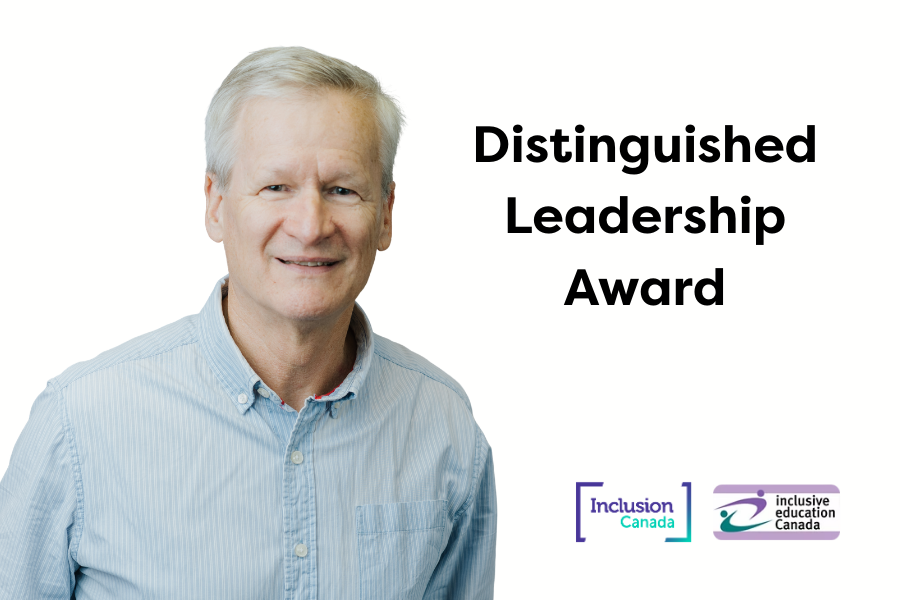
Ken Pike Recognized as Distinguished Leader in Inclusive Education
On February 26, Inclusive Education Canada recognized the 2026 Distinguished Leaders in Inclusive Education. Among those honoured was one of New Brunswick’s most influential champions for inclusion, Ken Pike.
As we reflect on the 40th anniversary of inclusive education in New Brunswick, this recognition is especially meaningful. Ken’s lifelong leadership has played a critical role in shaping the inclusive education system we know today, not only in our province, but across Canada.
A Foundation for Inclusive Education
Ken’s work in advancing inclusion began early in his legal career. In the mid-1980s, he became involved in advocacy efforts supporting families whose children with intellectual disabilities were excluded from regular classrooms.
This work contributed to a landmark moment in New Brunswick’s education system: the introduction of Bill 85 in 1986. The legislation affirmed that students with disabilities have the right to be educated in the regular school system, a shift that helped position New Brunswick as a national and international leader in inclusive education.
The impact of that work continues to shape classrooms across the province today.
A Lifetime of Advocacy
Following his legal career, Ken joined Inclusion New Brunswick, where he spent over 35 years advancing law reform and public policy to support inclusive lives for people with intellectual and developmental disabilities.
His influence extends well beyond education. Throughout his career, Ken helped advance policies that strengthened disability supports, expanded employment opportunities, and supported more inclusive housing options so people could live in their own communities and housing arrangements of their choosing..
He also played an important role in advancing supported decision-making, legislation in New Brunswick, helping to ensure seniors and adults with intellectual disabilities are recognized as having the right to make decisions about their own lives .
A Personal Commitment to Inclusion
Ken’s dedication to inclusion is also deeply personal.
Growing up in Saint John, Ken’s older brother, John, had Down syndrome. His brother’s life and experiences helped shape Ken’s understanding of community, dignity, and belonging, and influenced the path he would later take as an advocate.
That personal connection helped guide Ken toward a lifelong commitment to ensuring people with disabilities are included in every aspect of community life.

Recognizing a Lifetime of Leadership
Over the course of his career, Ken has received numerous honours recognizing his contributions to social justice and disability rights. Among them is the Order of New Brunswick, one of the province’s highest distinctions for individuals who have made exceptional contributions to New Brunswick.
This latest recognition from Inclusive Education Canada celebrates the lasting impact of his leadership and advocacy.
Other Distinguished Leaders Recognized
Ken was recognized alongside two other national leaders in inclusive education:
- Dulcie McCallum, a lawyer, former B.C. Ombudsperson, and long-standing disability rights advocate whose work has influenced inclusive education in Canada and internationally. She also served as an advisor to the Canadian effort developing the United Nations Convention on the Rights of Persons with Disabilities.
- Cameron Crawford, a leading researcher and policy expert whose work with Inclusion Canada, the Roeher Institute, IRIS, and Toronto Metropolitan University has strengthened evidence-based policy and inclusive practice across Canada and beyond.
Continuing the Work
As we continue recognizing the 40th anniversary of inclusive education in New Brunswick, this moment is also an opportunity to reflect on the leaders who helped make it possible.
Ken Pike’s vision and leadership have shaped a province where more children learn together in their neighbourhood schools, and where inclusion continues to grow.
Ken often emphasizes that inclusion is ultimately about expectations and opportunity:
“When we give people the tools they need and the right to be involved in decisions about their lives, they can go a long way.”
His work reminds us that progress in inclusive education happens because people are willing to stand up, advocate, and imagine something better.
And because of leaders like Ken, that work continues.