
In 1985, a group of families came together with a simple but powerful belief: their children deserved to learn alongside their peers.
That belief sparked a Charter challenge that would change the future of education in New Brunswick. On June 18, 1986, the New Brunswick Schools Act was changed forever, paving the way for inclusive education across the province.
This year, we celebrate 40 years of inclusive education: 40 years of progress, learning, advocacy, and a commitment to the idea that every child belongs.
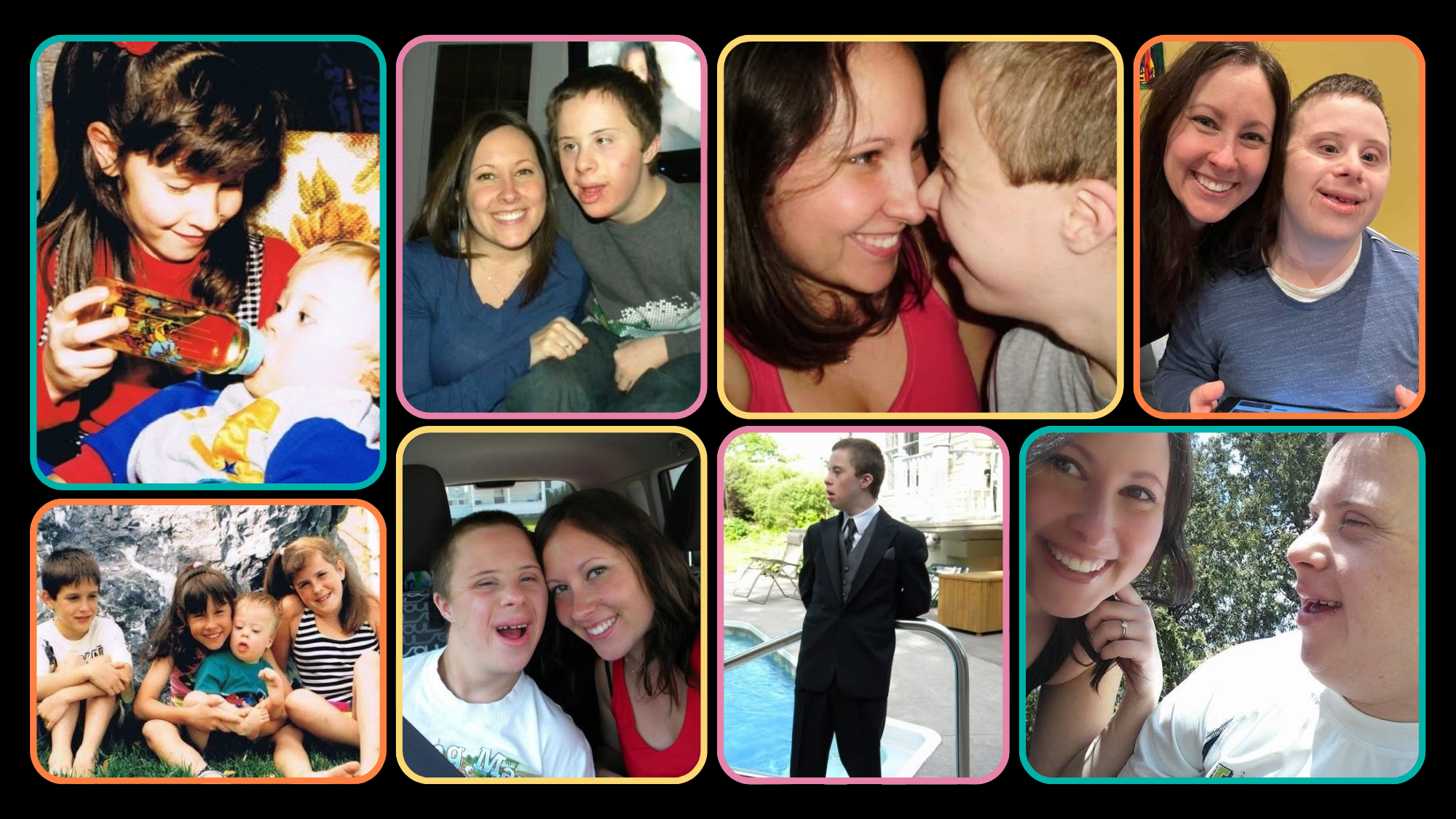
For Shana Woodill, Director of Inclusive Education, this milestone is more than a reflection on policy and history. It is deeply personal.
Shana’s brother, Daniel, has Down syndrome and experienced inclusion in school.
This is the story she shared at our Wake up with Inclusion breakfast event held earlier this year in Moncton:
**SHANA SPEAKS**
This year, we celebrate four decades of inclusive education. Forty years of progress, forty years of learning, and forty years of saying, “All children belong.”
And for me, this isn’t just policy work. It’s personal. My brother has Down syndrome, and he was included in school. When I visit my hometown, where he still lives, I often take him out for lunch. One day, as I was grabbing our order, the person at the drive thru window talked right over me, straight to Daniel in the passenger seat. His face lit up. He jumped right into the conversation with this huge smile on his face, responding and looking at her like I would an old friend.
And I remember sitting there thinking: “Would this connection, even though a small moment, have been possible if he hadn’t been included in the regular classroom?” I honestly don’t think so. That young woman wouldn’t have known him. She wouldn’t have had the chance to grow up alongside him. That moment, that simple ‘catching up’ conversation, came from belonging.
That’s what inclusion does. It builds communities where people recognize each other, value each other, and connect in ways we often take for granted.
We’ve come a long way. Today, we have a whole generation of students who have only ever known inclusive classrooms. They are growing into the kind of adults who hire inclusively, who welcome, who support – simply because it’s how they were raised.
But we also know inclusion is a work in progress. Not because children and inclusion are the issue; they never are. But because our system needs the right supports. Our teachers need resources and teams they can count on. Families need to know that their children have fair, equitable opportunities to thrive. This work takes a movement, and a movement takes dedicated leaders like those original Saint John families to carry this work forward.
**END**
Over the past 40 years, New Brunswick has seen generations of students grow up in inclusive classrooms. Many young people today have only ever known a school community where everyone learns together.
Those students are becoming adults who understand inclusion naturally. They are future employers, coworkers, neighbours, and leaders who are more likely to welcome and support others because inclusion has always been part of their experience.
But the work continues.
Inclusive education is not only about whether children belong. The focus must be on ensuring the right supports are in place so every student has the opportunity to succeed.
Teachers need resources and teams they can rely on. Families need confidence that their children have equitable opportunities to learn, grow, and thrive.
Creating inclusive communities takes a collective effort. It takes the dedication of families, educators, advocates, and leaders who continue moving this work forward, just like the original family advocates did 40 years ago.
Because when children learn together, communities grow together.
And it all begins with believing that everyone belongs.